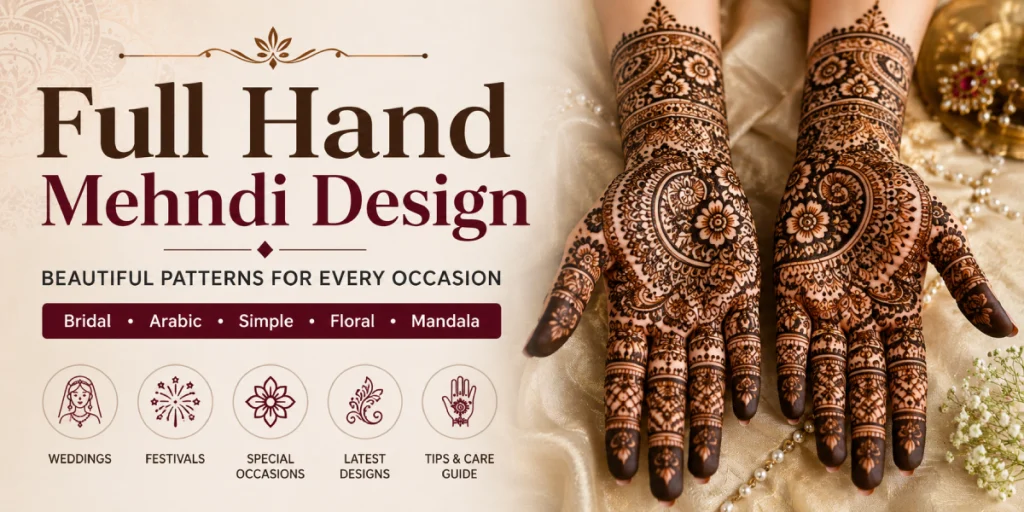
A full hand mehndi design is a popular choice for weddings, festivals, family functions and other special occasions. These designs cover most of the hand, starting from the fingertips and extending towards the wrist or forearm. They can include flowers, leaves, paisleys, mandalas, peacocks and traditional Indian patterns.
Whether you prefer a simple design or a detailed bridal pattern, there are many styles to choose from. The right design depends on your occasion, personal preference and the amount of time you want to spend applying mehndi.
In this guide, you will find different full hand mehndi design ideas, popular patterns, tips for beginners and advice on achieving a beautiful henna stain.
What Is a Full Hand Mehndi Design?
A full hand mehndi design is a henna pattern that covers a large area of the palm and the back of the hand. Many designs also extend from the wrist towards the forearm to create a complete traditional look.
Unlike small mehndi patterns that cover only one or two fingers, full hand designs contain several connected elements. The artist combines different shapes and motifs to create a balanced pattern without leaving too much empty space.
These designs are suitable for brides, bridesmaids, festival celebrations and people who enjoy detailed henna artwork.
Popular Full Hand Mehndi Design Ideas
There are several styles available for different occasions. Here are some popular options to consider before selecting your next design.
1. Traditional Indian Full Hand Mehndi Design
Traditional Indian mehndi designs feature paisleys, flowers, fine lines, leaves and curved patterns. The artist fills the hand with small decorative details to create a rich and complete appearance.
This style is especially popular for weddings, Karwa Chauth, Teej, Diwali and other traditional celebrations. You can choose matching patterns for both hands or use slightly different designs for a unique look.
2. Bridal Full Hand Mehndi Design
A bridal full hand mehndi design usually contains intricate patterns that extend from the fingertips to the forearms. Common elements include peacocks, floral motifs, mandalas, dulha-dulhan figures and decorative wedding symbols.
Some brides also include their partner’s name or initials within the design. These small personal details make the mehndi more meaningful.
Bridal patterns require patience and careful application because they contain many fine lines and closely arranged motifs.
3. Simple Full Hand Mehndi Design
A simple aesthetic mehndi design in full hand is ideal for people who prefer clean patterns without too many complicated details. It may include large flowers, curved vines, leaf chains and a few decorative finger patterns.
This style can be a good option for beginners who want to practise applying mehndi at home. You can start with larger shapes and gradually add smaller details as your skills improve.
4. Arabic Full Hand Mehndi Design
Arabic mehndi designs are known for bold flowers, leafy vines and flowing patterns. Instead of covering every part of the hand, many Arabic designs use diagonal arrangements with spaces between the motifs.
An Arabic full hand mehndi design can extend from the fingers to the wrist and forearm. It creates an elegant appearance and is suitable for parties, festivals and family functions.
5. Mandala Full Hand Mehndi Design
Mandala designs use circular patterns as their main feature. A large mandala can be placed in the centre of the palm, with smaller circles, petals and lines arranged around it.
Decorative finger patterns and wrist bands help complete the look. This style works well for people who enjoy symmetrical artwork and balanced designs.
6. Floral Full Hand Mehndi Design
Floral mehndi designs use flowers of different sizes, curved stems and delicate leaves. Large flowers can cover the centre of the palm, while smaller flowers connect the design to the fingers and wrist.
You can choose a dense floral pattern for a wedding or a lighter arrangement for a festival. Floral designs are also useful for beginners because the patterns can be adjusted to different skill levels.
Full Hand Mehndi Design for Different Occasions
Choosing a design according to the occasion can help you find the right balance between detail and simplicity.
- Wedding: Choose an intricate bridal design with paisleys, peacocks, flowers and detailed finger patterns.
- Karwa Chauth: Traditional Indian patterns with floral details and decorative wrist motifs are popular choices.
- Teej: Select a traditional full hand design with curved lines, leaves and small flowers.
- Eid: Floral Arabic patterns and symmetrical designs can create an elegant festive look.
- Diwali: Choose a medium or detailed design featuring mandalas, flowers and decorative lines.
- Family functions: A simple floral or Arabic design may be suitable when you want an attractive pattern without spending several hours applying it.
You can also combine two styles to create a design that matches your outfit and personal taste.
How to Choose the Best Full Hand Mehndi Design?
Before selecting a pattern, consider the following points.
Consider Your Experience
If you are a beginner, start with simple flowers, leaves and curved lines. Experienced artists can try detailed bridal patterns, peacock motifs and complex geometric designs.
Check the Design Placement
Look at how the pattern moves from the fingertips towards the wrist. A well-planned design should look balanced from different angles.
Match the Occasion
Detailed bridal patterns are suitable for weddings, while lighter floral and Arabic styles can work well for smaller functions.
Consider the Application Time
Intricate designs take longer to apply than simple patterns. Choose a style that fits your schedule, especially if you are applying mehndi yourself.
Tips for Applying Mehndi at Home
Follow these practical tips to make your mehndi application easier.
- Clean your hands: Wash your hands with soap and dry them properly before applying mehndi.
- Practise the pattern: Draw basic flowers, leaves and curved lines on paper before using the cone.
- Use a fresh cone: Choose a suitable henna cone and practise controlling the pressure for even lines.
- Work slowly: Start with the main motifs and fill the remaining spaces with smaller details.
- Allow it to dry naturally: Follow the product instructions and avoid rubbing the design while it dries.
- Follow safe aftercare: Remove the dried paste as directed by the product instructions and avoid washing the area immediately if the instructions recommend keeping it dry.
The final stain usually develops over the following 24–48 hours. Results vary depending on the henna product, skin and aftercare.
For safety, choose a reputable henna product intended for skin application. Avoid so-called black henna products that may contain para-phenylenediamine (PPD), which can cause serious skin reactions.
Frequently Asked Questions
Which full hand mehndi design is best for a wedding?
Intricate bridal designs featuring paisleys, peacocks, mandalas and floral patterns are popular choices for weddings. You can also add personalised details to make the design special.
Which full hand mehndi design is easy for beginners?
Simple floral patterns, leafy vines and larger mandalas are good starting points. These designs allow beginners to practise basic shapes before attempting detailed artwork.
How long does a full hand mehndi design take?
A simple design may take around 30–60 minutes, while a detailed bridal design can take several hours. The actual time depends on the pattern and the artist’s experience.
How can I make my mehndi stain darker?
Use a reputable henna product and follow its application and aftercare instructions. The stain develops naturally over time, and its darkness varies from person to person.
Can I apply a full hand mehndi design myself?
Yes. Beginners can start with simple patterns and practise on paper before applying mehndi to their hands. More intricate bridal designs may require help from an experienced artist.